
Why the Columbia, SC Market Is One of the South's Best Kept Real Estate Secrets


The market most out-of-state investors overlook
When investors scan the South for opportunity, they typically land on Charlotte, Nashville, or the Florida coast. Meanwhile, the Columbia, South Carolina metropolitan area quietly checks nearly every box on a seasoned investor's list — and homeowners here are building equity in a market with genuine staying power.
That's not a sales pitch. It's a product of the market's structural foundations: a large, diverse employer base anchored by state government, one of the Southeast's most significant military installations, a flagship research university, and a healthcare industry that ranks among the region's largest. None of those pillars disappeared when rates rose. None of them will.
"Columbia still has the advantage of being a very affordable city even with price increases across the state's real estate markets."
The economic engine: what keeps demand steady
Understanding why a real estate market performs requires understanding what pays the people who live there. The Columbia MSA has four interlocking economic pillars that make it unusually resistant to the boom-bust cycles that plague single-industry towns.
State Government & Public Sector
As South Carolina's capital, Columbia is home to the state's largest employer — the State of South Carolina itself — along with numerous agencies, courts, and regulatory bodies. Government employment provides a stable, recession-resistant payroll base that keeps rental and purchase demand floor-level consistent.
Fort Jackson & the Defense Community
Fort Jackson is the largest U.S. Army installation for Basic Combat Training in the country. The combined military economic impact on the Midlands region exceeds $6.6 billion annually, with Fort Jackson alone accounting for $4.2 billion. The defense community supports over 57,000 jobs across active-duty service members, veterans, and Department of Defense civilians. Military families are a perennial source of rental demand and repeat home-buying activity — they move on assignment cycles, they return after service, and they bring predictable income verification to every transaction.
University of South Carolina
With more than 36,000 students and a $4.2 billion annual economic impact in the Columbia metro area alone, USC supports one in every ten jobs and $1 out of every $9 in labor income in the region. The university is also developing a health sciences campus with a new School of Medicine, a proposed neurological hospital, and a Brain Health Center — meaning its footprint is expanding, not contracting. For investors, proximity to a flagship university means long-term rental demand from students, faculty, researchers, and medical professionals.
Healthcare & Major Corporate Employers
Prisma Health, Lexington Medical Center, Blue Cross Blue Shield, and MUSC Health anchor the healthcare sector. Manufacturing adds additional breadth: Michelin, Kraft Heinz, Samsung, Nephron Pharmaceuticals, and a one-million-square-foot Amazon fulfillment center all operate in the metro area. South Carolina attracted $8.19 billion in pledged industrial investment in 2024 alone — the third-highest year on record for the state — meaning the job base continues to grow.
What the numbers say about today's market
The Columbia market emerged from the post-pandemic rate environment in relatively good shape. Here is where things stand and why both buyers and sellers are positioned well.
Seller's Perspective
The median home price in the Columbia metro area has grown steadily, reaching approximately $271,000 — a meaningful gain from prior years. The market remains a seller's environment in sought-after neighborhoods where inventory is limited and qualified buyers are active. Average days on market have settled around 44–47 days, giving sellers time to negotiate without sitting too long. Homes are still receiving multiple offers in competitive price ranges.
Critically, Columbia's affordability advantage relative to Charleston, Greenville, and the national median continues to attract in-migration from higher-cost markets — providing a steady pipeline of new buyers for your listing.
Buyer & Investor Perspective
Columbia's median sale price sits roughly 35% below the national median of $407,500. That gap is the single most important number for investors underwriting a deal: it means lower acquisition costs, lower property taxes relative to income, and wider margin between purchase price and replacement cost. For owner-occupants, it means significantly more house per dollar than comparable cities in the Southeast.
Employment in the Columbia MSA grew by 1.9% year-over-year, adding 8,300 jobs. Population for the Combined Statistical Area has crossed 1.1 million. Both trends support continued housing demand.
The submarkets: where opportunity lives in the Midlands
The Columbia MSA is not a monolith. Different neighborhoods and surrounding communities suit different buyer profiles. Here is a practical orientation for those evaluating where to focus.
Lexington County:
The fastest-growing county in the MSA. Top-ranked schools, newer construction, and strong resale velocity make this the market of choice for families relocating from higher-cost metros. Lake Murray frontage commands a significant premium.
Northeast Columbia:
Established suburban corridors with consistent price appreciation. Proximity to I-77 and Fort Jackson drives steady demand from military families. A wide range of price points suits first-time buyers and move-up purchasers alike.
Rosewood & Forest Acres:
Walkable in-town neighborhoods with strong community identity. Popular with USC-affiliated professionals and young families. Limited inventory keeps competition elevated and prices supported.
Blythewood & Elgin:
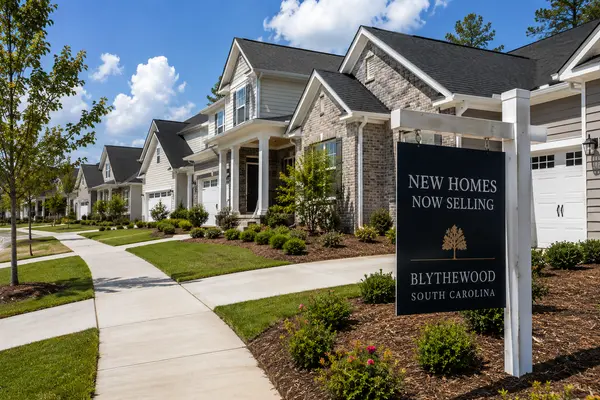
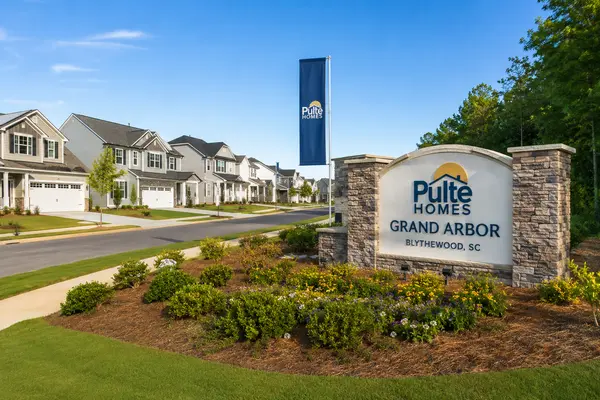
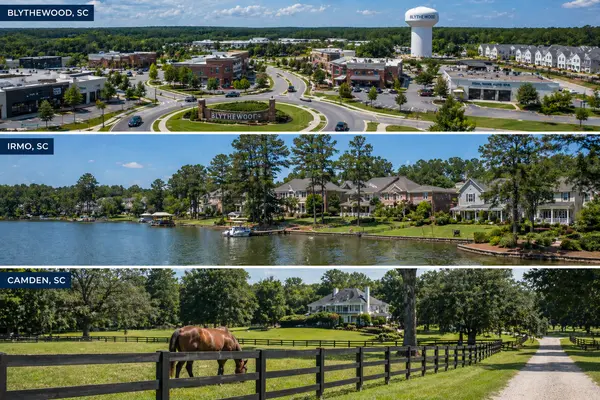
Northern Richland and Kershaw County growth corridors. New construction, more acreage per dollar, and lower density attract buyers priced out of Lexington — and investors seeking long-term land value appreciation.
Cayce & West Columbia:
Redevelopment energy along the Congaree Riverfront has made this one of the most watched areas in the MSA. Entry-level prices, improving walkability, and proximity to downtown Columbia create a classic value-add profile for investors.
Sumter & Surrounding Counties:
For investors stretching their capital, Sumter and adjacent counties offer some of the lowest price-to-rent ratios in the state. Shaw Air Force Base anchors employment, and the county posted some of the strongest job growth in South Carolina in recent years.
A frank word on the rate environment
Mortgage rates have been the defining story of the past two years, and anyone who tells you they don't matter is not being straight with you. Rates in the mid-to-upper-6% range have reduced purchasing power and kept some would-be sellers locked into homes they financed at 3%.
Here is what that actually means for each type of client:
- For sellers:Inventory remains constrained precisely because existing owners are reluctant to trade a low rate for a higher one. That protects your equity. Buyers in this market are motivated and qualified — casual lookers have been filtered out by affordability pressure.
- For buyers:You are competing against fewer offers than during the 2021–2022 peak. Any rate reduction — even a temporary dip — creates an opportunity to lock in a purchase price before competition re-intensifies. Columbia's prices, while higher than five years ago, remain dramatically below national averages.
- For investors:Cash buyers and those using commercial leverage structures are not subject to 30-year rate constraints. Columbia's rent-to-price ratio remains among the better-performing in the Southeast, and military and university demand provides occupancy stability even in softer leasing markets.
Why Columbia, and why now
The case for Columbia real estate is not a story about a hot market getting hotter. It is a story about a market with durable fundamentals that has been structurally undervalued relative to peer metros and is catching up — gradually, sustainably, with staying power.
South Carolina as a whole continues to attract corporate investment, in-migration from high-cost states, and favorable business climate rankings. The Columbia MSA is the state's largest combined statistical area, and its diversified economic base means that when one sector softens, others typically hold. That is what you want underneath a real estate investment or a primary residence purchase.
If you are thinking about listing your home, know that your equity position is likely stronger than you expect, and that prepared sellers in this market can still move efficiently. If you are evaluating Columbia for investment, the fundamentals that institutional capital looks for — employer diversity, population growth, below-replacement-cost acquisition prices, and reliable rental demand from military and university populations — are all present here.
The opportunity in Columbia isn’t going to stay under the radar for long. As more investors shift their focus to affordable, high-growth markets, the best deals are getting scooped up fast.
If you’re serious about building cash flow or securing your next investment property, now is the time to move. If you want more information click one of the links below!
🌐Website 📖About Me 📞CONTACT ME
Categories
Recent Posts



GET MORE INFORMATION
